Perfectly imperfect; exploring nature through art

Perfectly imperfect; exploring nature through art

Kirsten Luckins

Discover a creative, nature-inspired activity from our artist-in-residence that celebrates imagination over perfection, using simple mark-making techniques to transform paint, found objects and playful experimentation into unique concertina sketchbooks inspired by the natural world.

If you’re like me, you may be more than a little daunted by the thought of trying to draw or paint accurate and lifelike pictures of animals and plants. Once you start really looking, everything in nature is astoundingly complex! But I’m here to tell you that it is still possible to have fun and make something attractive inspired by nature, without having to be good enough to illustrate a spotter’s handbook. It’s time to try mark-making for concertina sketchbooks…a mindful yet playful activity for all ages. 

Step 1. Gather together some materials and mark-making tools. You’ll need some paper; that could be a sketchbook page or just a sheet of copier paper, but something a little bit heavyweight and as big as possible is best. You’ll also need something like paint, and something like brushes – if you look in this picture, you’ll see I’ve used acrylic paints, inks, turmeric and instant coffee as my liquid pigments. For my mark-making tools I’ve got artist’s brushes, but also decorator’s paintbrushes and a wide assortment of random detritus ready to experiment. Try fruit nets, sponges, grass or poppy seed-heads, corks, or corrugated packaging. I’ve even got some candle stubs to scribble a wax resist and ink over.

An artist's materials table showing a paint palette, coffee jar, paint bottles, paintbrushes, fruit nets and paper on a gridded table

Kirsten Luckins

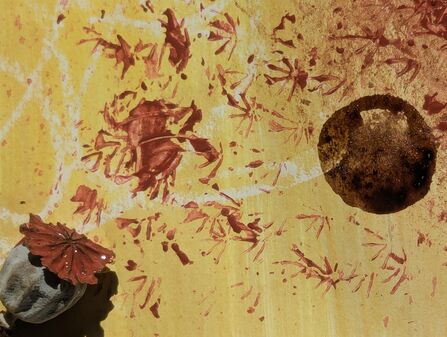
Step 2. Go wild on your paper! I like to have several sheets of paper on the go, so one can be drying while I mark the others. I like to blow wet paint with a straw so it makes interesting drips, and spray paint by flicking it off an old toothbrush. Don’t be afraid to layer marks over each other and don’t try to make it look like anything! Just see what actions and effects bring you pleasure. Top tip – if you’re worried about things getting too chaotic, keep some coherence by limiting your palette to maximum five colours. I’ve chosen brown, yellow, green, and brick red. I’ll use black and white later for details.

A toothbrush with wooden handle and black bristles lays upright on a white piece of paper marked with brown and black splashes and blown paint

Kirsten Luckins

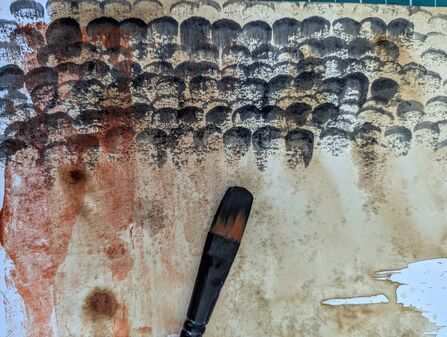
Step 3. You may find that your marks remind you of things in nature. A squiggle becomes the flightpath of a bee, while a spray of flicked paint now feels like pollen. Random swoops of a brush seem to have a rhythm like waves, while careful repeated dabs suggest feathers.

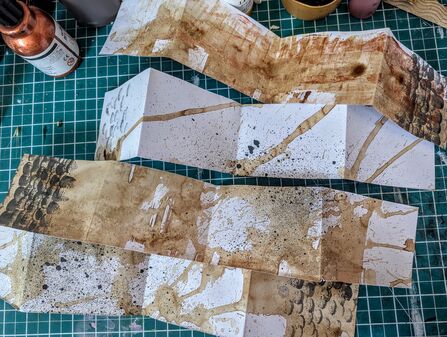
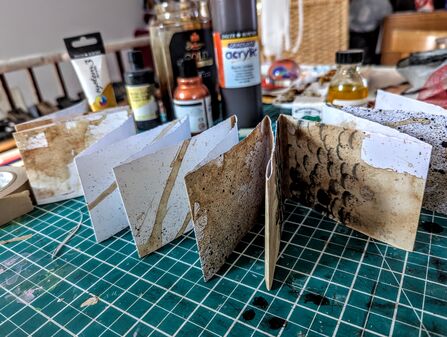
Step 4. When your paper is dry, you can fold it into four both vertically and horizontally, then cut it into strips along the longest folds. Use masking tape to connect those strips at their short ends to create a long concertina-folded ‘sketchbook’. The new sequencing and framing of marks might suggest new landscapes to you?

Step 5. Your marks now offer you a background for sketching, collaging, or writing. If they suggested a landscape, plant or creature, now’s the time to follow that inspiration a little further. Perhaps you can do an image search online and sketch from that, or collect together some facts and folklore about your focal animal? For example, I became interested in sparrowhawk facts (like their Old English name “spurhawk”) because of the feather-like brush marks I’d made.

An open booklet showing the word 'spurhawk' top left above a drawing of a sparrowhawks head

Kirsten Luckins

I love these little booklets as place to put small poems. 

Explore my little tern booklet created using the same methods outlined in this blog here

If you've been inspired, please share images of your creations with the Trust and I on social media. We'd love to see them!