

Tees Valley Wildlife Trust
Little Terns at Seaton Carew
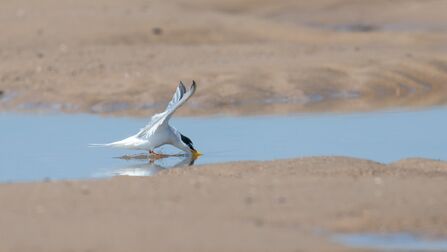
Small, fast and determined, little terns are the smallest seabirds to breed in the UK. Each spring they travel around 3,000 miles from West Africa to nest on our coast, arriving in April and returning south with their young in August.
Little terns have been part of the Tees Valley coastline for more than 40 years. First recorded at Coatham in 1985, they later moved to Crimdon and, in 2019, chose Seaton Carew as their new nesting home.
Tees Valley Wildlife Trust
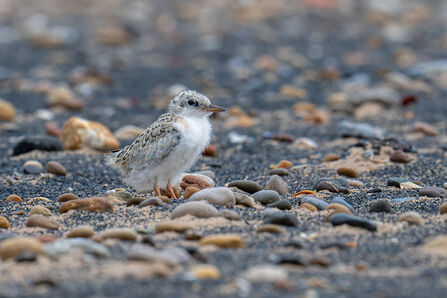
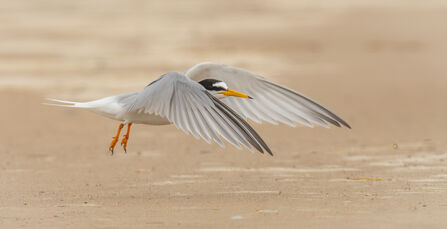
Juvenile little tern on Seaton Carew beach. Image credit Steve Lindsay
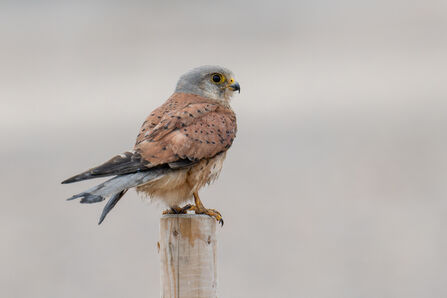
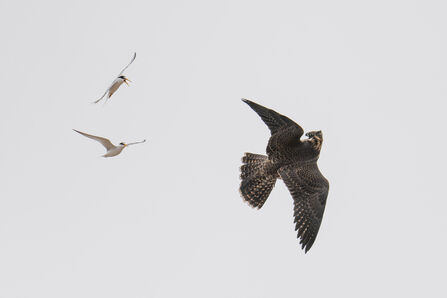
Kestrel, a common predator at the Seaton Carew little tern site
Matthew Livsey
Matthew Livsey

Steve Lindsay
A changing story
The move to Seaton Carew followed several tricky years at Crimdon, where disturbance and predation affected breeding success. Little terns nest directly on open sand and shingle. Their eggs are perfectly camouflaged, but this also makes them vulnerable to people, dogs and predators like foxes and birds of prey.
After a promising first year at Seaton Carew, 2020 and 2021 were challenging. Predators, extreme weather and high tides meant that only ten chicks fledged from 120 nesting pairs across those two seasons.
In 2022, protection of the site was strengthened. Chestnut paling fencing was installed and daytime wardens, supported by volunteers, were present throughout the breeding season. When foxes appeared on site, night wardens were introduced. That commitment continues today, from the moment the first eggs are laid until the last chick has taken flight.
Since protective measures were introduced, fledging rates have improved significantly. The results show what careful management, partnership working and community support can achieve.
The reality of protecting wildlife
Conservation is rarely straightforward and our little tern site has faced a number of challenges.
In 2024, repeated disturbance by a fox led to early departures and made the colony more vulnerable to a kestrel, which reduced fledging numbers late in the season. In 2025, that same kestrel returned earlier than expected. Of an estimated 213 chicks hatched, 70 successfully fledged.
While those figures are difficult to read, they sit within a much bigger and more hopeful picture. Compared with earlier years along our coastline, the nesting site at Seaton Carew demonstrates real progress. It also reminds us that our ongoing protection and community support for this important site remains essential.
Wardens and volunteers
Although the fencing provides valuable sanctuary, it would not fully protect the terns without the dedication of wardens and volunteers. Their role is to safeguard the nesting area, monitor the birds and chat to visitors about why the site matters.
Throughout the season, wardens record the number of adults, nests, eggs, chicks and fledglings. This information contributes to local and national monitoring, helping to build a long-term picture of how little terns are faring.
One licensed warden also rings chicks. In 2024, a bird was recorded at Seaton Carew that had first been ringed at Crimdon in 2001. At 23 years old, this bird has travelled an estimated 138,000 miles during its migrations. That incredible journey, made by a bird no larger than a starling, is a powerful reminder of how connected our coastline is to the wider world.
Community support
The little terns have attracted interest from birders and photographers since their very first appearance at Seaton Carew in 2019, and local support for the colony has grown year on year. There is something truly special about these tiny seabirds travelling thousands of miles to choose our coastline as the place to raise their young.
Seaton Carew offers a rare opportunity to observe little terns at close quarters. With the help of warden telescopes and binoculars, visitors can watch courtship displays, spot newly hatched chicks and see young birds take their first flight before beginning their long journey south.
The site now attracts visitors from across the UK and beyond, bringing wider benefits to the local area. At the heart of it all are the regular local visitors, whose patience, curiosity and encouragement throughout the season make a real difference to the birds and to everyone involved in protecting them.